Urbanized 2022 ▪ UE5 ▪ Environment Art & Lighting
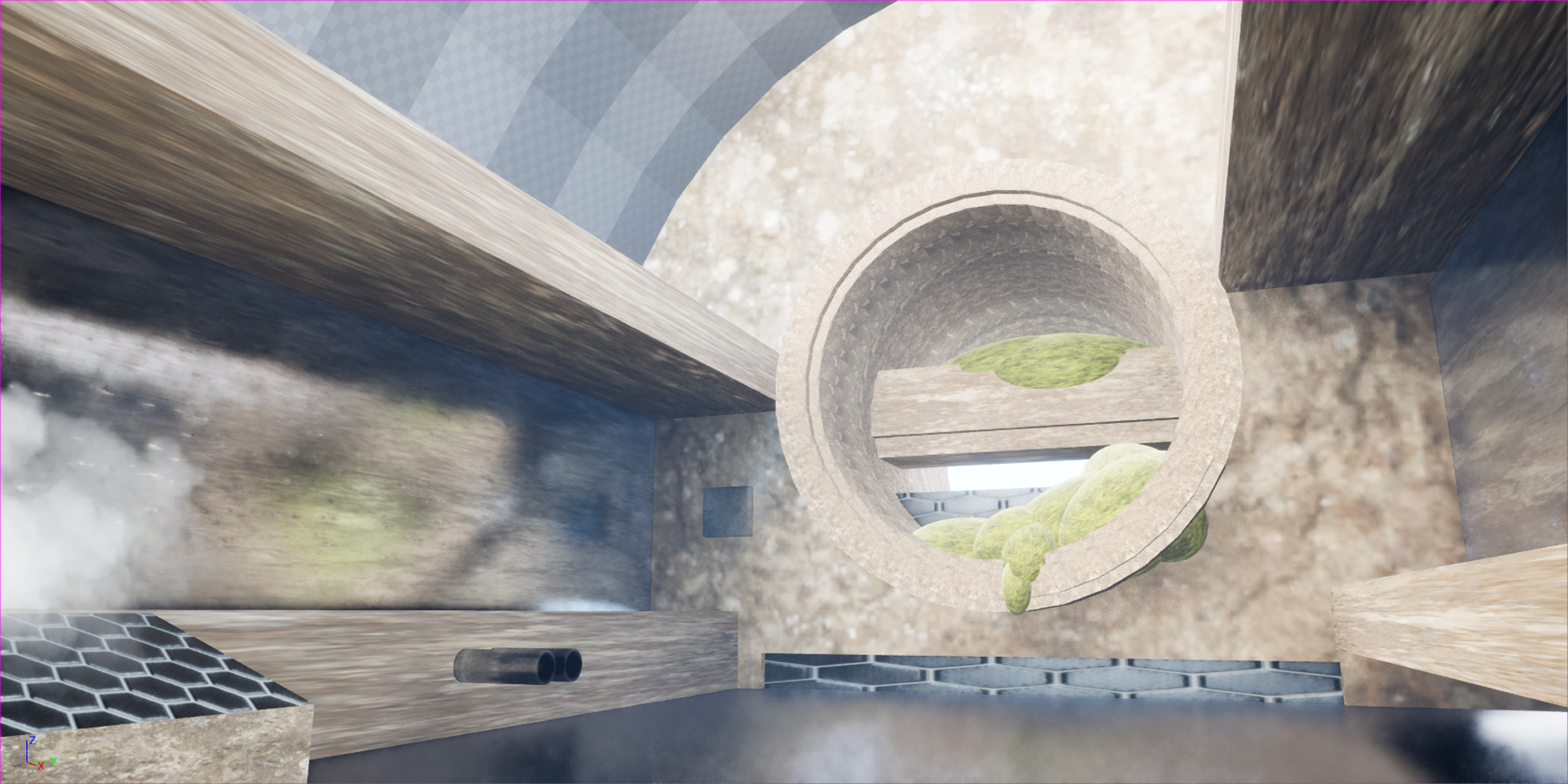
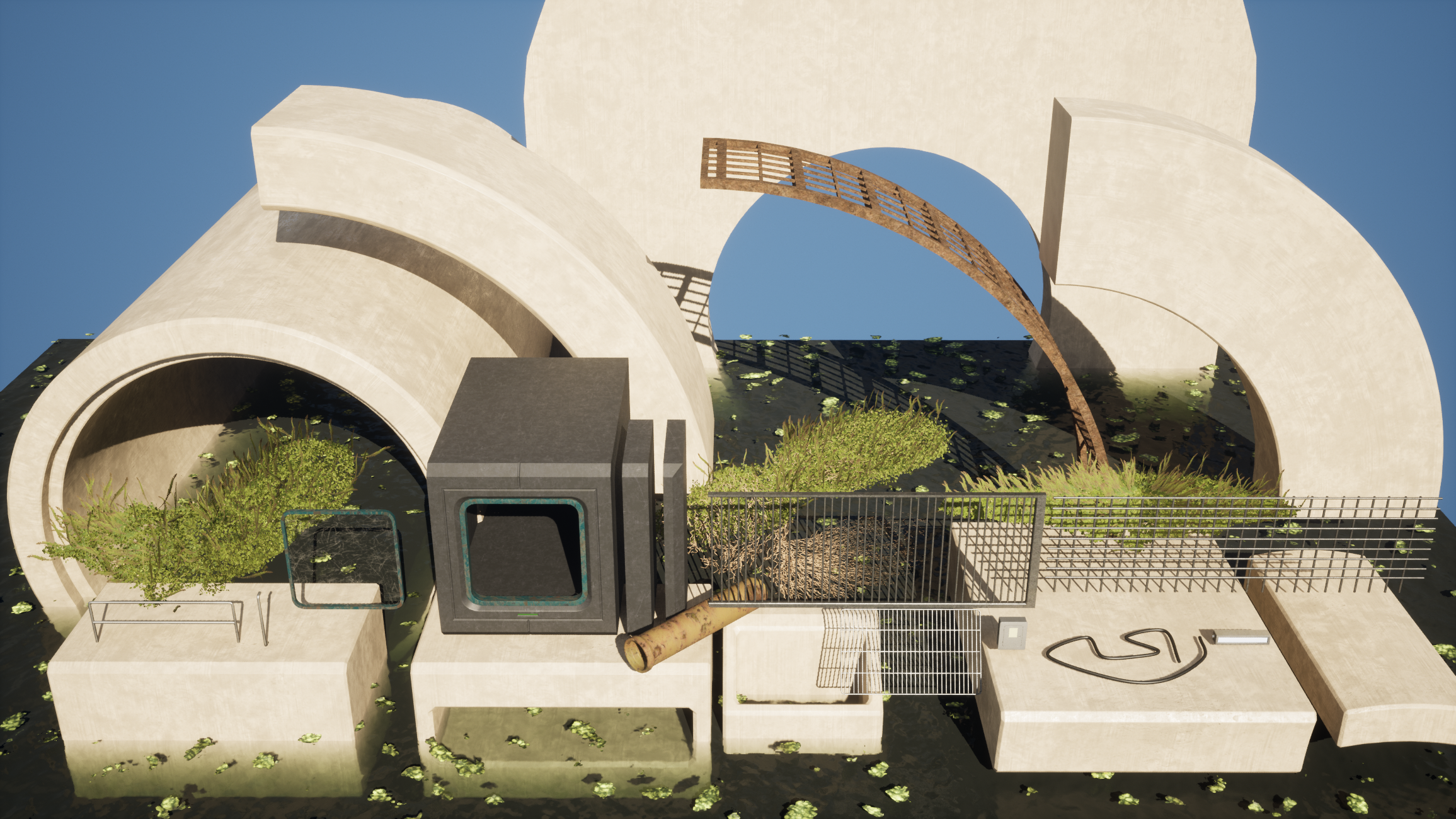
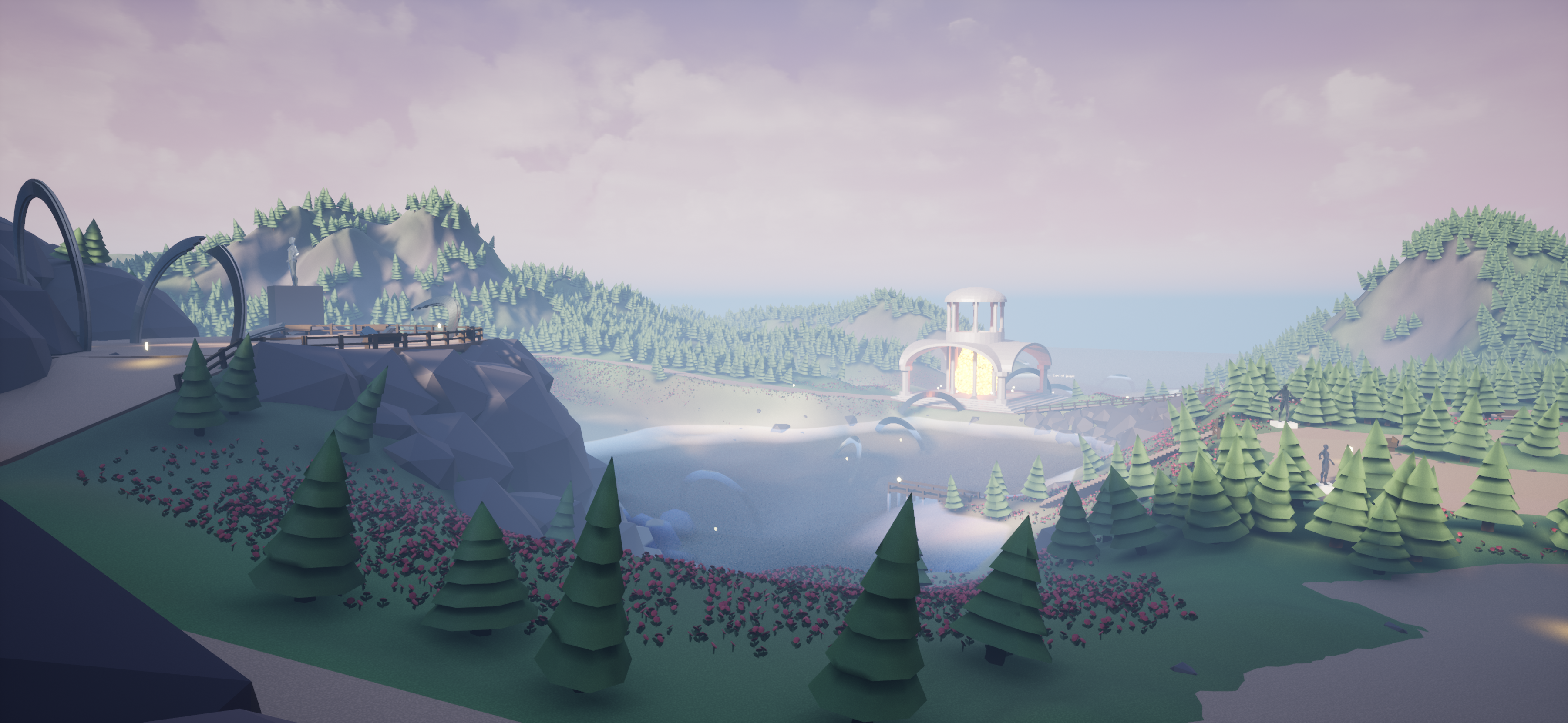
For this project I wanted to dive into exploring the processes and techniques of high fidelity environment art and settled on Nick Stath's "Urbanized" as my inspiration piece after discussing my goals with several professional environment artists. I spent the next several months working to recreate Urbanized within Unreal Engine 5 using nothing but what I could create myself. there were weekly check-in reviews that proved invaluable at keeping me on target.
Urbanized proved an incredibly illuminating deep dive into Lumen and Nanite for me as I learned a lot about the limitations and issues these new technologies have but also the incredible versatility and power within when wielded correctly. but ultimately UE5.0 had some major flaws with Lumen and Nanite which necessitated the transition to UE5.1 half way through Urbanized's development.

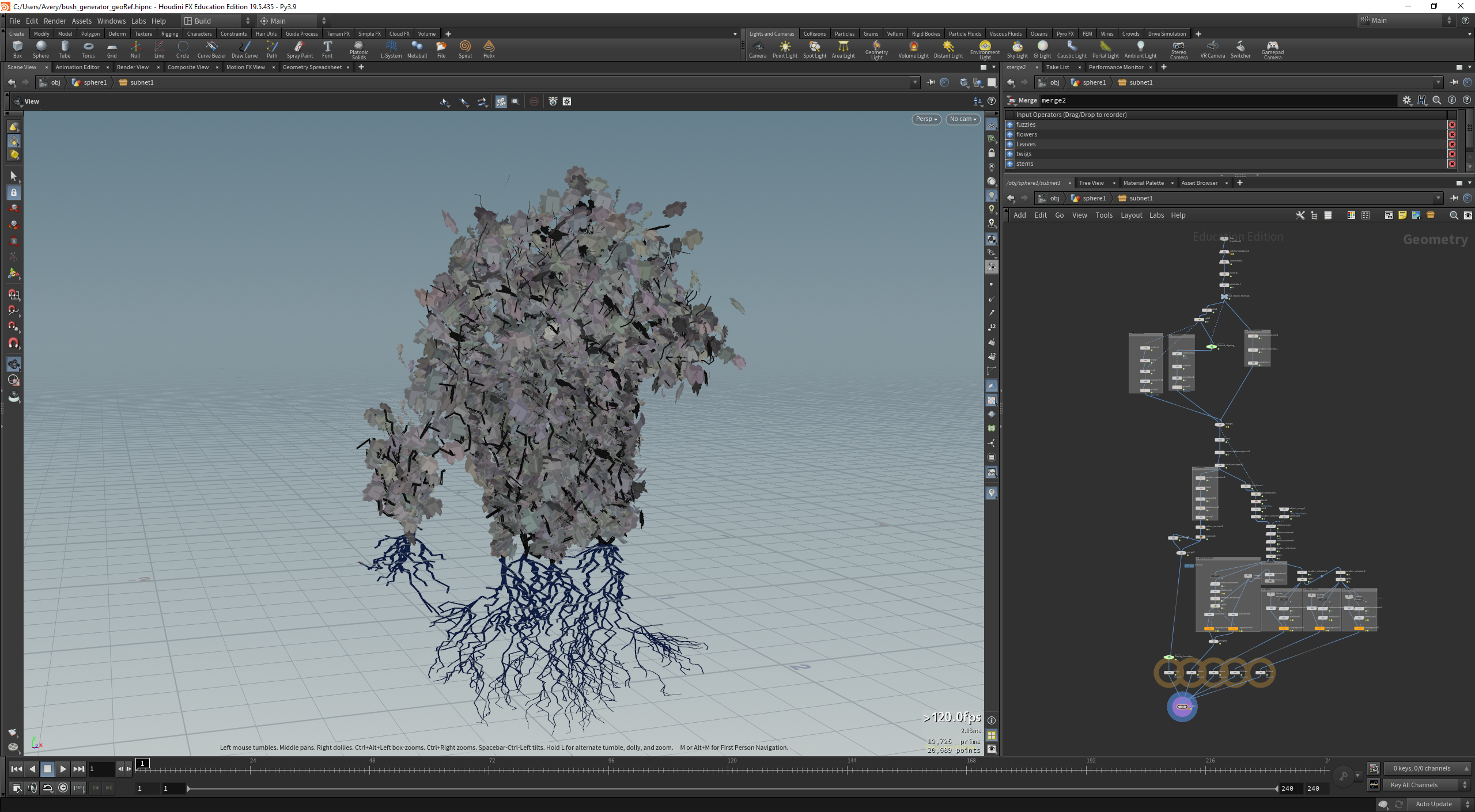
Generating foliage within the scene is a custom Houdini tool I developed that generates based on an input volume or volumes so as to allow in engine directing of the generated foliage using simple in editor tools as the sphere generator.
There were a lot of bumps along the way with using the tool, namely that its initial version took ages to run in engine and ballooned RAM usage to unusable levels. But after a rewrite and more documentation deep dives I was able to vastly improve the performance of the tool, solve the memory leak, and improve its final look.
While working on Urbanized, I paid special attention to the performance of the project. I treated it as though this project was targeting an environment for a video game and worked to keep frame rates up during development. This involved various tweaks to geometry and shadow cascades, and a lot of time debugging what was crashing my frame rate using UE5's internal profiling tools as well as Render Doc. While I cannot say this is running its best, it could be way worse and I learned a lot along the way and now know of things I would put more time into to reduce draw calls and texture memory usage. As is, this project runs at 30fps at 2560x1440.
Inspired by Nick Stath's "Urbanized"
Textures Sourced From: Quixel, Textures.com, and Poly Haven
November Project 2021 ▪ UE4 ▪ Environment Design & Lighting
An exploration of high fidelity visual production within the constraints of real time rendering in Unreal Engine 4. The November Project incorporated all I had learned about Unreal Engine within my first three months, focusing on materials development, shaders, lighting, VFX, and asset optimizations to create a richly detailed island environment. Lush with plant life, eerie custom fog, high fidelity lighting, and more, it became a standout piece in my early Unreal Engine experiments in technical art and environment design. This project runs at 90fps on a RTX 3070 at 2560x1440 resolution.
Models and textures Sourced From: Epic Games, Quixel, SilverTm, and Poly Haven
Location Study 2022 ▪ UE4 ▪ Level Design & Lighting
What started as a location study inspired by a park near me morphed into something utterly of its own as I iterated and delved deep into creating a simple environmental representation of the space complete with lighting, basic materials, low poly models, and a lot of consideration for how players move through the space as refined by several rounds of play testing. I incorporated my experience in material creation, environment design, architecture, lighting, and direct feedback from play testers and observations made from watching them. I tuned the space to draw the player through it and into places they traditionally may not have gone and to reward them for creative exploration.
While the basic shape of the space stayed consistent from the moment I moved from sketches to polys, the left side saw considerable changes after each round of play tests and development before being completely scrapped and redesigned. The location this study was based on was a bit odd and had a few buildings that were utterly out of place and I tried to retain some of that but it proved detrimental to the level and I replaced it with a sculpture garden more reminiscent of the rest of the space. Other changes over time were the addition of the water zones to the play space as I and others found it enticing to enter, and eventually I added a path to draw the players towards it for those who don’t feel a natural draw to the lowest spot in the play space.
Overall I feel this quick test turned into a lovely study that encouraged out-of-the-box play from testers and great enjoyment of the space as people wondered what led to the park being adorned by both the decay of a civilization and the accomplishments of another. If you would like to explore it yourself, it is available for download on my itch.io page.
Download: itch.io/location-study
Caver 2022 ▪ UE4 ▪ Level Design & Game Design
Caver seeks to bend the relationship of light in play and level design, forcing the player to contend with a limited light source and light sensitive enemies deep within the belly of the Earth. Working as a continuation of underground environment constraints and design from prior experimental designs, Caver expands the concepts into a full blown experience with changing challenges that gradually introduce new concepts to players and eventually it forces players to apply all they have learned to succeed. Extensive play testing was conducted by both skilled and unskilled players to assess problem points and determine design issues that hampered enjoyment or were too easy. In the end everything that you see in Caver besides the UE mannequin, I created for this project to better convey the underworld.
Download: itch.io/caver